Weddings, regardless of religion or culture, are memorable and symbolic events that mark the union of two individuals and their families. In Islam, marriage is considered a sacred act and a union established by a contract between the two parties. Muslim weddings are often characterized by distinctive traditions and customs that vary from one region to another. In this article, we will explore the question of who pays for the wedding dress in Islam, examining the basic principles of Muslim marriage, the cultural and religious significance of the wedding dress, as well as the different traditions and customs surrounding this question.
The basic principles of marriage in Islam
Marriage in Islam is based on a contract called “Nikah,” which is concluded between the man and the woman with the consent of their respective guardians. This contract stipulates the rights and obligations of both parties in the union and ensures that each person's interests are protected. Muslim marriage is also considered a means of preserving chastity and morality, as well as strengthening family and social ties. The wedding ceremony, called “Walima,” is a joyful event that brings the two families together to celebrate the couple's union.
The cultural and religious significance of the wedding dress
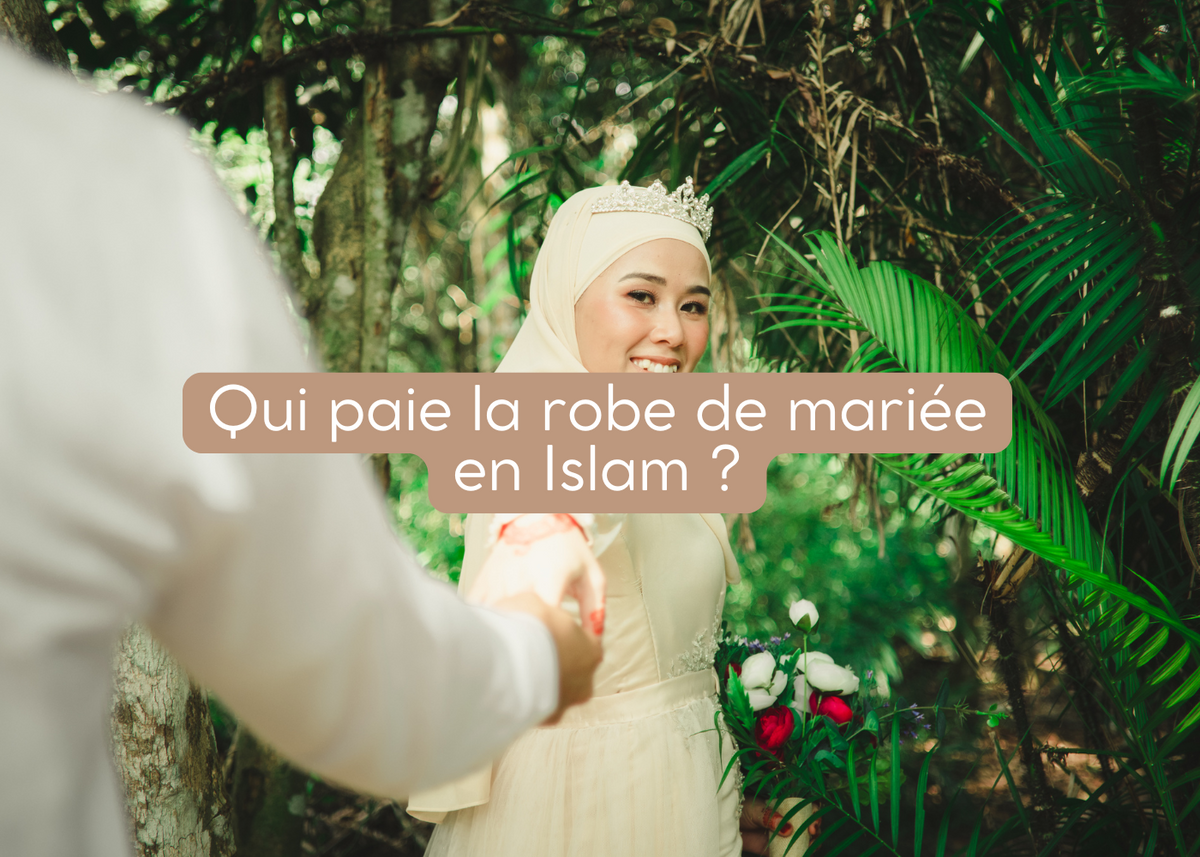
The wedding dress holds an important place in Muslim weddings, as it symbolizes the bride's purity, beauty, and modesty. The dress is generally designed to cover the bride's entire body, in accordance with the principles of Islamic modesty (hijab). Muslim wedding dresses vary in style, color, and materials depending on the region and the bride's personal preferences. However, they are often adorned with embroidery and beads, thus reflecting the bride's cultural richness and elegance.
Who pays for the wedding dress in Islam

The concept of “Mahr” and its role in marriage
In Islam, the “Mahr” is a dowry paid by the groom to the bride upon the conclusion of the marriage contract. It is a mandatory gift that can take the form of money, goods, or services. The Mahr is considered the bride's exclusive right and can be used to fund her personal expenses, including the purchase of the wedding dress. However, it is important to note that the amount of the Mahr must be agreed upon by both parties before the marriage and must be mentioned in the marriage contract.
The sharing of expenses between the groom's and bride's families
In many Muslim cultures, wedding expenses, including the purchase of the wedding dress, are shared between the groom's and bride's families. The distribution of costs may vary depending on local customs and each family's financial capabilities. In some cases, the groom's family may cover all expenses, while in others, both families may contribute equally or according to a prior arrangement.
The bride's own responsibility
It is also possible for the bride herself to pay for her wedding dress, especially if she has her own financial resources. This practice is particularly common in modern and progressive Muslim societies, where women are encouraged to be independent and exercise some control over their personal finances. However, it is important to emphasize that this decision must be made in accordance with Islamic principles and the cultural norms of the community concerned.
The variety of traditions and customs in Muslim weddings

Regional and cultural differences in who pays for the wedding dress
As mentioned earlier, the traditions and customs surrounding the question of who pays for the wedding dress in Islam vary considerably from one region to another and from one culture to another. Some Muslim communities may have very specific rules regarding this question, while others may adopt more flexible and personalized approaches. It is therefore essential for Muslim couples and their families to inquire about local customs and respect cultural norms when planning their wedding.
External influences on Muslim wedding traditions
Over time, Muslim weddings have been influenced by various external factors, such as globalization, urbanization, and evolving social values. These influences have led to a certain diversification and modernization of Muslim wedding practices, including those concerning the wedding dress and its funding. It is therefore important for Muslim couples to find a balance between respecting Islamic traditions and adapting to contemporary realities.
Respecting Islamic values in wedding dress choices
Finally, it should be remembered that, regardless of how the wedding dress is funded, it is crucial for Muslim couples to respect the principles of Islamic modesty and elegance in their clothing choices. The bohemian wedding dress must comply with the requirements of hijab and reflect the bride's dignity and piety, while highlighting her natural beauty and unique style.
Also discover our article on “how much dry cleaning for a wedding dress costs” or on “Who pays for the wedding dress in France