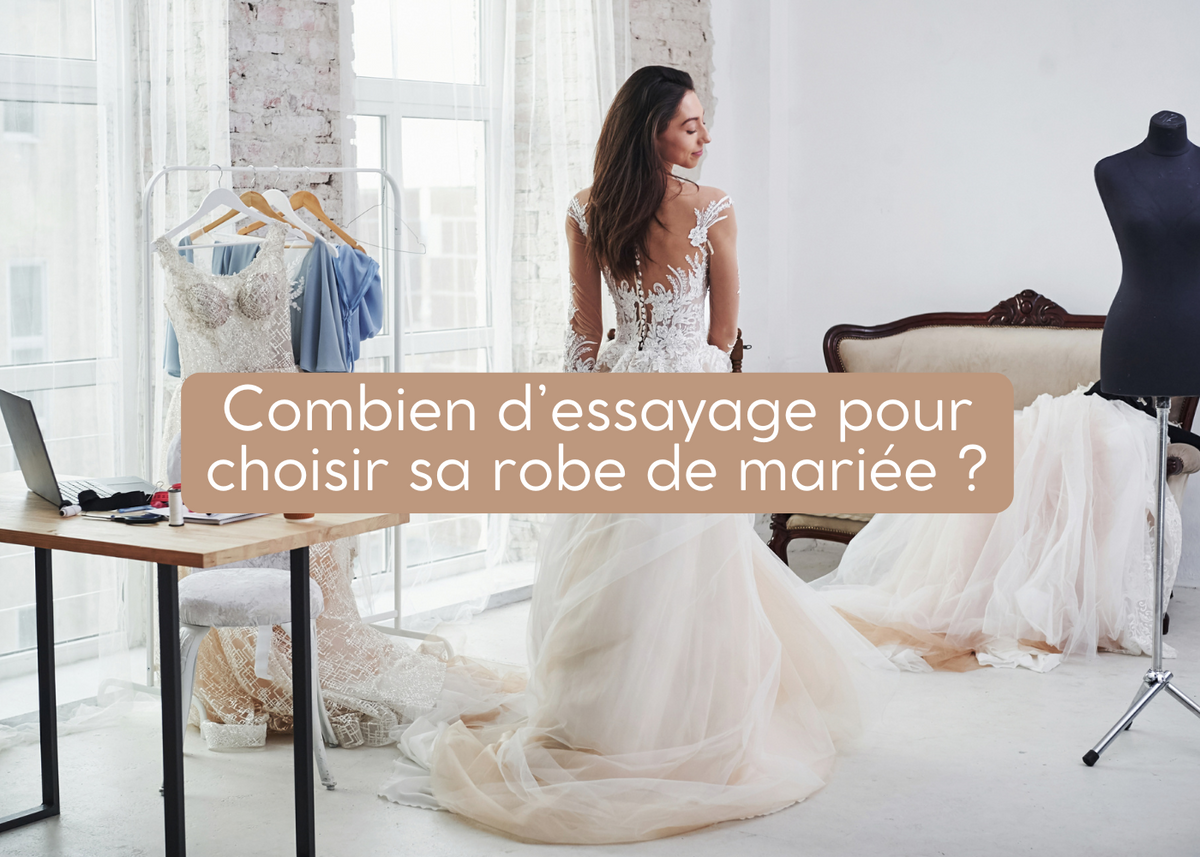
Several factors can influence the number of fittings required to find the perfect wedding dress. First, the type of dress chosen has a significant impact on the number of fittings required. For example, a country wedding dress may require fewer adjustments than a more structured or complex dress.
In addition, the time between purchasing the dress and the wedding day can also affect the number of fittings. Indeed, if you have plenty of time, you can take the time to browse different boutiques and try on many styles before deciding.
Finally, it is important to note that every bride is unique, and some people may find their ideal dress more quickly than others. It is therefore essential to be patient and not get discouraged if you need to have several fittings before finding the dress of your dreams.
The different types of wedding dresses
There is a wide variety of wedding dress styles and cuts, ranging from traditional dresses to more modern and original ones. Among the most popular styles are the princess dress, the mermaid dress, the empire dress, the A-line dress, and the sheath dress. Each of these cuts has its own characteristics and will suit different body types.
Furthermore, wedding dresses can be made from various materials, such as lace, satin, chiffon, or tulle. The choice of fabric can also influence the number of fittings required, as some fabrics are easier to adjust than others. It is therefore crucial to take all these elements into account when looking for the ideal dress, in order to limit the number of fittings and save time.
The first step: online and in-store research
Before starting the fittings, it is recommended to do online research to familiarize yourself with the different styles and trends of wedding dresses. Many specialized websites and blogs offer advice and tips for choosing the perfect dress based on your body type and preferences. In addition, you can also browse the online catalogs of boutiques and designers to spot the styles that appeal to you the most.
Once you have a clearer idea of the type of dress you are looking for, it is time to make appointments at different boutiques to try on the selected styles. Do not hesitate to ask for the opinions of your loved ones and the in-store consultant during the fittings, as they will be able to give you valuable advice to help refine your choice.
The wedding dress fitting process

The first fitting: discovery and selection
During the first fitting, the main goal is to discover different dress styles and select the styles that flatter you the most. This step is crucial, as it will allow you to better understand your preferences and eliminate the dresses that do not suit you. Take the time to talk thoroughly with the in-store consultant so she can guide you in your choice.
It is common to have to try on several dresses during this first session, as it can sometimes be difficult to know which style suits you best without trying them on. Remember that How long a wedding dress fitting takes can vary depending on the boutique and the number of dresses to try on, so it is important to allow enough time for this step.
Intermediate fittings: adjustments and alterations
Once the dress has been selected, it is often necessary to make adjustments and alterations so that it fits your body perfectly. These steps are essential, as they ensure that the dress will be comfortable and flattering on the big day. Intermediate fittings allow you to check the progress of the adjustments and make additional alterations if necessary.
The number of intermediate fittings will depend on the complexity of the dress and the alterations required. Some dresses may only require one or two fittings, while others may require more. It is important to communicate well with the boutique and the seamstress to ensure that all alterations are carried out correctly.
The final fitting: validation and finalization
The final fitting generally takes place a few days or weeks before the wedding. At this stage, the dress should be fully fitted and ready to wear. During this fitting, it is important to check that all the details are in place and that the dress is comfortable to wear. If last-minute alterations are necessary, it is crucial to inform the seamstress so she can carry them out quickly.
Once you are completely satisfied with the dress, it is time to pick it up and prepare it for the big day. Make sure to keep it in a safe place, away from dust and moisture, until it is time to wear it.
Tips for optimizing the number of fittings
Preparation before the fittings
To optimize the number of fittings, it is essential to prepare well before starting the sessions. This includes researching the different dress styles, browsing online catalogs, and making appointments at various boutiques to have a wide selection of styles to try on. It is also recommended to think about the accessories you want to wear with the dress, such as shoes, jewelry, and the veil, so you can try them on at the same time as the dress.
In addition, it is important to carefully choose the people who will accompany you during the fittings. Choose close friends or family who know your tastes well and can give you constructive advice to help you find the ideal dress.
Tips for saving time during the fittings
To save time during the fittings, it is wise to follow certain tips. First, try to group your appointments at different boutiques on the same day or weekend to limit travel. Next, plan an outfit that is easy to put on and take off for the fittings, as well as underwear suitable for the dress you want to try on.
It is also advisable to take photos of each dress you try on, so you can compare them later and more easily eliminate the styles that do not suit you. Finally, do not hesitate to ask for the opinion of the in-store consultant and your loved ones to refine your choice and avoid unnecessary fittings.
Managing unexpected events and last-minute changes
Despite good preparation and optimizing the number of fittings, unexpected events may occur, such as weight gain or loss, last-minute changes desired for the dress, or delays in the adjustments. In these situations, it is important to stay calm and communicate well with the boutique and the seamstress to find suitable solutions.
If necessary, plan one or two additional fittings to handle these unexpected events and ensure that the dress will be perfect on the big day. Remember that the most important thing is to feel comfortable and confident in your wedding dress, regardless of the number of fittings required to achieve this.
In conclusion, the number of fittings for a wedding dress depends on many factors, such as the style of the dress, the timeframes, and each bride's preferences. By following the advice and tips presented in this article, you will be able to optimize the number of fittings and find the dress of your dreams with complete peace of mind. Good luck with your search and enjoy this unique experience! Also discover: How many fittings for a wedding dress.